
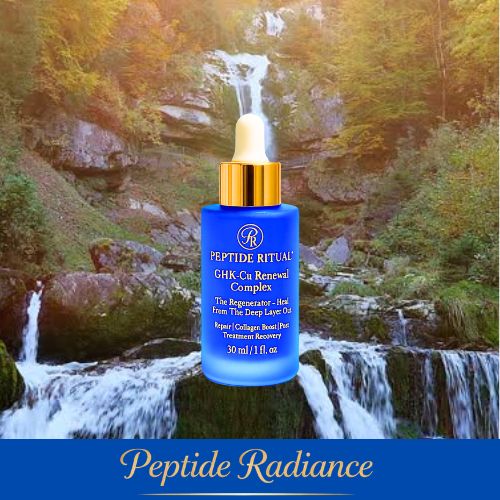
If you’ve been wondering what GHK‑Cu does for skin, it helps to start with what it actually is. GHK‑Cu is a copper peptide—a short chain of three amino acids bound to a copper ion—that naturally exists in the body. It acts as a signaling molecule, nudging skin cells to focus on repair, collagen support, and overall maintenance rather than just surface‑level hydration.
On ingredient lists, you’ll usually see it written as GHK‑Cu or copper tripeptide‑1 in serums, creams, or post‑procedure products. Many people start by exploring copper peptide skincare at Peptide Radiance to see which formulas best fit their routine. Unlike basic moisturizers, this peptide is aimed at the deeper “scaffolding” of the skin. That’s why it shows up so often in formulas positioned for anti‑aging, skin renewal, and barrier repair.
One of the main GHK‑Cu benefits is collagen support. As we age, collagen levels drop, and the fibers that keep skin firm become weaker and less organized. That’s when fine lines and slackness start to show—especially around the eyes, mouth, and cheeks. GHK‑Cu helps signal fibroblasts (your skin’s builder cells) to produce more collagen and other structural proteins.
Over time, this can make skin feel a bit more cushioned and supported. If your top goal is firmness, a targeted firming peptide concentrate can focus your routine on collagen‑supporting peptides. You won’t see a dramatic “lift” like a procedure, but you may notice that fine lines look softer and that makeup sits better on smoother, slightly firmer skin.
Another big piece of what GHK‑Cu does for skin is repair. It supports more organized tissue rebuilding and can be especially helpful if your barrier has taken a hit from over‑exfoliating, strong actives, or environmental stress. Many people who’ve gone too hard with acids or retinoids find copper peptide formulas noticeably calming.
By backing up your barrier, GHK‑Cu can reduce tightness, stinging, and that “overworked” feeling after cleansing. Paired with gentle cleansers and ceramide‑rich moisturizers, it fits naturally into routines focused on barrier repair and sensitive‑skin care. Those focused mainly on calming sensitivity and rebuilding resilience may prefer a barrier rebuild peptide ritual that layers soothing peptides with barrier‑supportive hydrators.
Glow is really about calm, even, well‑hydrated skin—something GHK‑Cu quietly supports. By helping dial down low‑grade inflammation and oxidative stress, it can make redness and blotchiness less obvious over time. As the skin repairs itself more efficiently, post‑blemish marks and mild uneven tone often fade more smoothly.
GHK‑Cu isn’t a peeling acid or a hardcore brightener, but its repair‑first approach lets your natural radiance show through.If you want to build a routine that supports that kind of steady radiance, you can explore peptide skincare at Peptide Radiance to see formulas built around repair and glow. With consistent use and daily sunscreen, many people notice a softer, healthier glow and a more balanced complexion.
When people search “what does GHK‑Cu do for skin,” they’re really asking, “What will I actually see—and when?” GHK‑Cu is a slow‑and‑steady builder, not a quick‑fix resurfacing treatment, so realistic timelines matter.
In the first 2–4 weeks, the most common changes are comfort and texture. Skin often feels softer, less reactive, and more hydrated, especially if your barrier was stressed. That tight, squeaky‑clean feeling after washing usually eases up as your skin holds moisture better.
Over 6–12 weeks, results show up more in the mirror. Fine lines around the eyes and mouth can look gently softened, rough patches on the nose, chin, and forehead feel smoother, and overall tone appears more even and rested. The “after” look with GHK‑Cu is subtle but meaningful: slightly firmer skin, a calmer surface, and a healthier glow rather than dramatic peeling or drastic resurfacing.
Because it works in the background on structure and repair, GHK‑Cu shines as a long‑term investment in skin quality, especially when combined with daily SPF and a solid basic routine. Many people keep their main GHK‑Cu step at night, using a GHK‑Cu overnight peptide mask as the final layer in their evening routine.
GHK‑Cu is surprisingly versatile, but it’s especially helpful for a few key groups. It’s a strong match for anyone who wants gentle, long‑term anti‑aging without constant irritation. If your main questions revolve around what GHK‑Cu does for skin and whether it fits your concerns, these guidelines help.
You’re a great candidate if:
GHK‑Cu may feel too gentle as a standalone hero if you’re chasing very fast, dramatic resurfacing. If you want a ready‑made routine, you can explore curated peptide skincare rituals at Peptide Ritual to see complete systems built around peptides and repair. In that case, it works best as a supportive co‑pilot alongside targeted treatments, rather than the only active in your routine.
It helps your skin repair itself better, supports collagen, and calms irritation, leading to smoother, firmer, and healthier‑looking skin over time.
Yes. It’s often better tolerated than strong acids or retinoids, which makes it a solid option for sensitive or barrier‑damaged skin when introduced slowly.
Most people notice comfort and texture changes within a month, with more visible improvements in fine lines, firmness, and glow after about 6–12 weeks of consistent use.
Many routines combine them successfully. A common strategy is using vitamin C in the morning, then alternating GHK‑Cu and retinol on different nights to avoid overwhelming the skin.

Transforming skin through the science of peptides. Clinical results, naturally derived.