
Peptides are short chains of amino acids, often called the “building blocks” of proteins like collagen and elastin. In skincare, they act like tiny messengers, signaling your skin to repair itself, stay firm, and strengthen its barrier.
When you apply peptide creams or serums consistently, they can help soften fine lines, improve texture, and support a more youthful, resilient look over time. They’re also usually gentle, which makes them a smart pick if strong retinoids or acids tend to irritate your skin. Think of peptides as quiet workers in the background, slowly improving how your skin behaves and recovers every day.
Not all peptides are created equal. Some have standout data and are worth watching for on ingredient lists:
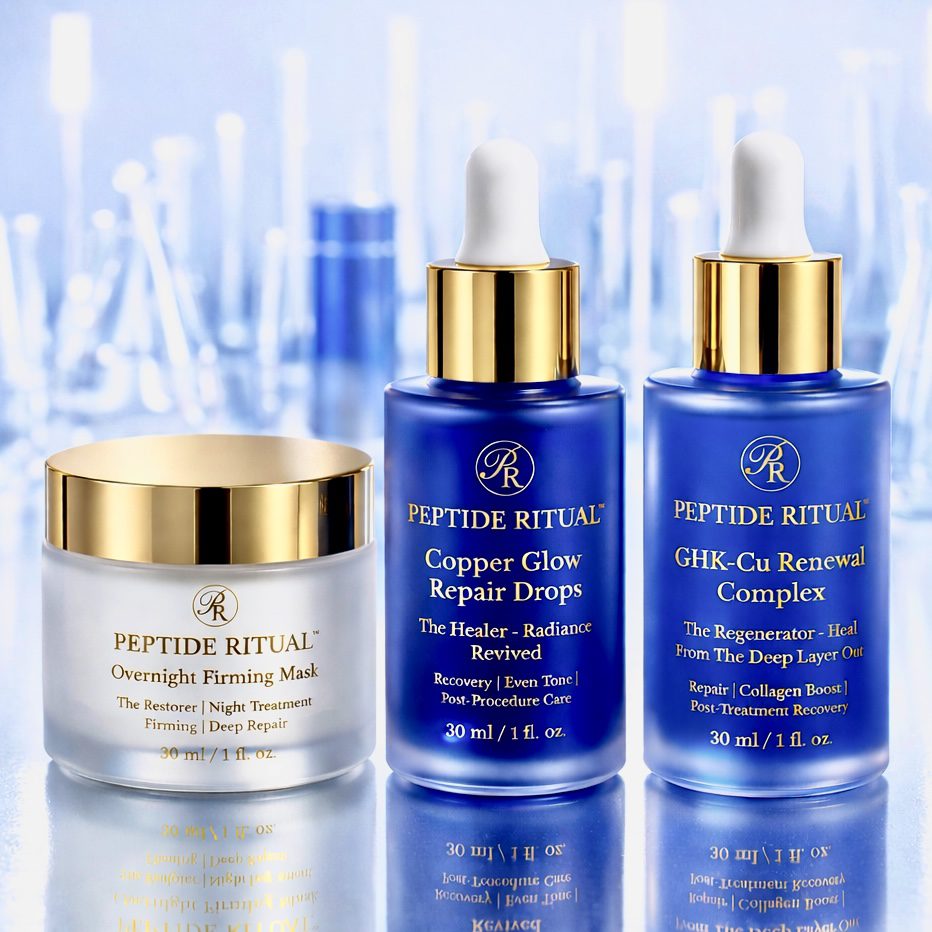
For an easy way to try GHK‑Cu, Matrixyl, and Argireline together, explore the peptide‑powered formulas from Peptide Radiance.
Here’s a simple, plug‑and‑play peptide routine most people can follow.
Morning routine:
Night routine:
To monetize softly, position your products as the “obvious choice” at serum and moisturizer steps, with brief benefit‑driven mentions.
Peptides are usually easy to layer, but there are a few combinations worth being careful with:
If you want to be extra safe, alternate strong exfoliation nights with “peptide recovery” nights focused on hydration and barrier support.
Peptides are not an overnight fix, and that’s where expectations often go wrong. Most people start to notice subtle improvements in texture and hydration in about 3–4 weeks with consistent, twice‑daily use.
For visible changes in firmness and fine lines, it’s more realistic to think in terms of 8–12 weeks of regular use. Photos taken a month or two apart can help you track progress better than the mirror. Remind readers that skincare is like going to the gym: steady, repeated effort gives better results than quick, intense bursts.
A lot of users sabotage their own results without realizing it. Some of the most common peptide mistakes include:
A simple message that converts well: stick with one solid peptide routine for at least three months before judging or switching.
Yes. Most peptide serums and creams are gentle enough for daily, even twice‑daily use, as long as your skin isn’t irritated.
Use peptide serums on clean, slightly damp skin before moisturizer. If your moisturizer contains peptides, apply it as your final step before sunscreen in the morning.
You can. Many people use retinol at night and peptides in the morning, or layer a peptide moisturizer after retinol to soothe and support the skin barrier.
They do different jobs. Vitamin C is great for brightening and antioxidant protection, while peptides focus more on support, firmness, and repair. You can absolutely use both in one routine.
Most people start in their mid‑20s to early 30s as a preventative step, but peptides are helpful at almost any age if your goal is healthier, stronger skin.

Transforming skin through the science of peptides. Clinical results, naturally derived.